The eternal struggle of dog training and teaching your dog to stay. You think you’ve got it nailed, and then – poof! Your furry friend becomes a canine magician, leaving you frustrated and wondering if you’ll ever achieve dog-training nirvana.But fear not, fellow dog owners! I’ve discovered a game-changing hack that’ll keep your dog in place without resorting to magic tricks (or losing your mind). Behold, the Door Knob Dog Training Hack!Want to see the magic happen? I’ve created a video that shows you exactly how to use the Door Knob Dog Training Hack https://www.youtube.com/embed/TNCKOa_EzXIWatch as I demonstrate this clever trick and transform from a frazzled dog owner to a confident training master. Your dog will thank you (and so will your sanity)!”
It’s simple yet genius. Loop the leash around the door handle, then close the door on it, creating a doggy door-knob sandwich. This nifty trick ensures your dog stays put, giving you the upper hand in training sessions.As the Navy SEALs say, “Two is one, and one is none.” In dog training, this means having a trusty anchor (like a door knob) to keep your dog from making a break for it.
With this hack, you’ll be well on your way to becoming a reliable, sturdy, and well-rounded dog-training hero.
The Ultimate Life Hack for Lazy Dog Parents: No More Effort Required!
Ah, the joys of dog ownership. Said no lazy dog parent ever. I’m not ashamed to admit it – I’m the laziest dog owner on the planet. I’m so lazy that I make a sloth look like the Energizer bunny. But hey, being lazy has its perks. I’ve developed some genius workarounds to avoid putting effort into my dog training. And today, I’m sharing my secrets with you.Want to see this lazy dog hack in action? Check out my latest video on YouTube where I demonstrate how to set up your own tethered leash system and share some hilarious behind-the-scenes footage of my dogs’ adventures. https://www.youtube.com/watch?v=xwFyvuPC7lIThe Leash ConundrumTake my trusty leash and not-so-trusty dog, for instance. You’d think it’s not that hard to grab the leash and attach my dog to an object like a couch or table when they’re having trouble staying put. But nope, not me. I’ve come up with every excuse in the book not to grab a leash:
- I’m too good of a trainer; I don’t need a leash.
- My dog is past the need for the leash, so we don’t need one.
- I promise I will stay focused and fix my dog as soon as they leave.
- It’s too far, and I’m too tired to grab my leash.
- I’ll just use my e-collar. I don’t need a stinking leash.
The Ultimate Lazy HackBut then, it hit me – the ultimate lazy dog owner hack. I keep a spare leash tied to my furniture all day, every day. It’s a lifesaver and always there when I need it. Plus, if a girl ever comes over in a pinch, I can just kick it out of the way when I’m not using it.
No more getting up to grab the leash from the garage, no more wasting time rummaging through the car, no more risky mailman encounters while I walk more than 5 feet to get it from the hook by the door. With my trusty couch-bound leash, I can just stroll over, clip it to the pup, and voilà! Instant dog-back tie – all while barely lifting a finger.
The Occasional Furry TwisterSure, sometimes the dogs get tangled up like a furry game of Twister. But let me tell you, it’s a game-changer for us lazy dog owners. No more excuses, no more forgotten leashes, no more unnecessary drama, and no more actual effort required. It’s a relief to know that this lazy dog owner hack has got my back, and it will have yours too.ConclusionIn conclusion, a tethered leash is the key to a happy household. So, stay lazy, my friends! Embrace the art of doing less and achieving more (or at least, achieving the same amount with less effort). Your couch (and your dog) will thank you.Lazy Dog Owner Tips and Tricks
- Keep a spare leash tied to your furniture at all times.
The Secret Weapons Every Dog Owner Needs: 9 Ways to Unlock Effortless Car Loading (Without Losing Your Mind or Your Back)
Ah, the age-old struggle of getting your furry friend into the car. It’s like trying to stuff a wet noodle into a sardine can while being attacked by a swarm of bees. But fear not, dear reader, for I have discovered the secret weapons to make car loading a breeze without breaking your back or losing your mind (entirely).Want to see these secret weapons in action? Check out my video, “The Secret Weapons Every Dog Owner Needs: 9 Ways to Unlock Effortless Car Loading (Without Breaking Your Back)”, where I demonstrate each of these techniques in hilarious and informative detail. Trust me, you won’t want to miss it! Your back (and your dog) will thank you. So, what are you waiting for? Grab some popcorn, and get ready to revolutionize your car-loading game! https://www.youtube.com/watch?v=m_KEahsOt8Q&t=36s1. Elevation is Key: Give Your Dog a Leg Up (Literally) Use a curb or a board to raise the elevation your dog is jumping from. Because, let’s face it, some dogs are just vertically challenged. It’s like they’re trying to jump onto a skyscraper while wearing flip-flops.2. Driveway Descent: Use Physics to Your Advantage Back down a driveway to lower the car’s entrance. It’s like having a secret ingredient in your recipe for car-loading success. Your dog will thank you, or at least not give you the stink-eye.
3. Boardwalk to the Backseat: Build Confidence (and a Bridge) Place a board or dog bed next to the car door to help your dog get in and out comfortably. Because, let’s be real, some dogs need a little extra help getting their paws on the floor.
4. Buddy System: Enlist a Cheerleader (or a Bribe) Have another person on the seat to help entice your dog into the backseat. Or, you know, just bribe them with treats. We won’t judge.
5. Practice Makes Perfect: Regular Reps (and a Lot of Treats) Do 5 reps in and out of the car when you’re not leaving. Because, let’s face it, practice makes perfect, and by perfect, I mean your dog won’t completely freak out.6. Runway to the Rescue: Create Space (and a Sense of Drama) Use a runway to give your dog space to build speed and inertia before making the jump into the car. It’s like a doggy catwalk, minus the catwalk (and the doggy supermodel).
7. The Doorway Funnel: Guide Your Dog (Gently, but Firmly) Use your body and the car’s doorway to create a one-way road, funneling your dog towards the backseat. Because, sometimes, a little guidance is all it takes (and by guidance, I mean a gentle shove).8. Leash Logic: Gentle Encouragement (and a Lot of Treats) Use a leash with gentle, steady pressure to encourage your dog to move forward. And by gentle, I mean don’t-yank-their-head-off gentle.9. The Three-Second Game: Encourage Forward Motion (and a Lot of Prayer) Play the “three-second game” by pulling the leash for three seconds, then releasing tension, encouraging your dog to take a step forward. It’s like a game of doggy roulette, minus the roulette (and the doggy).And there you have it! With these secret weapons, you can say goodbye to the days of back pain, frustration, and utter despair. Well, maybe not utter despair, but at least the car-loading struggle will be a little more manageable. Happy travels, and may the odds be ever in your favor!
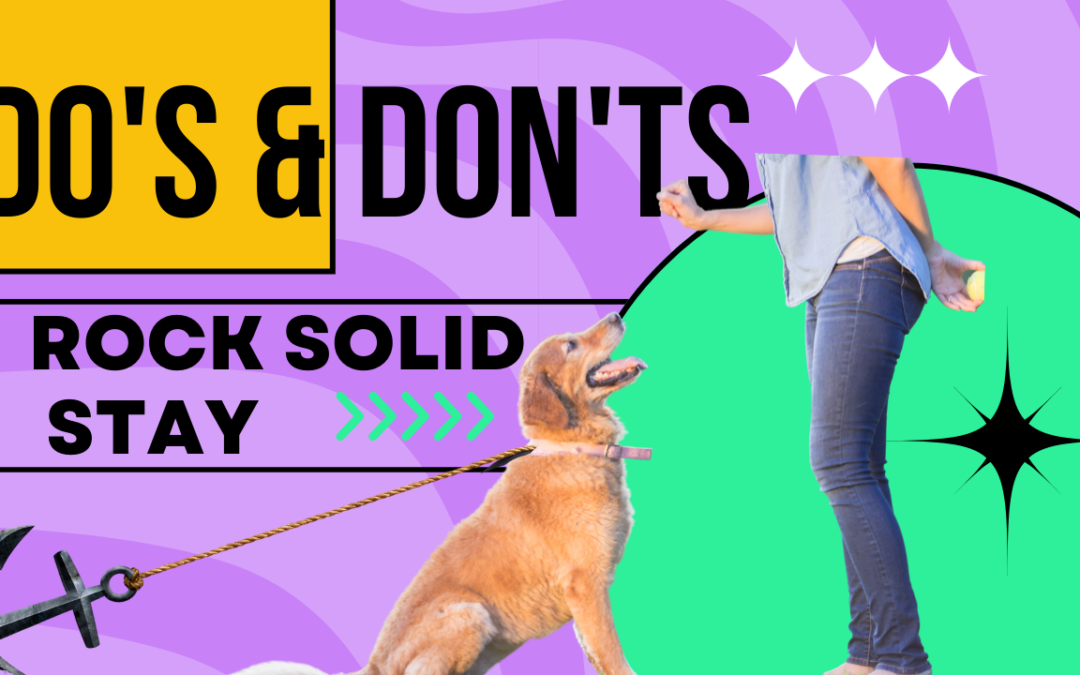
Mastering the Stay Command
Hey there, fellow dog lovers! Are you tired of your furry friend ignoring your pleas to stay still? Do you dream of having a dog that listens to you, even when there’s a squirrel outside? Well, buckle up, folks, because I’m about to spill the secrets to getting a rock-solid stay from your pup.Watch the Video: Mastering the Stay Commandhttps://www.youtube.com/watch?v=1gqKWX2o5PY&t=1sThe Magic of Release WordsBefore we dive into the dos and don’ts, let me tell you about the magic of release words. You see, I’ve got a special word that I use to let my dogs know they can finally stop posing like statues and go do their thing. It’s like a secret password that says, “Hey, kiddo, you’re free to go!” And, trust me, it’s a game-changer.Now, you might be wondering, “What’s the magic word?” Well, I’ll give you some ideas. You can choose from a variety of fun words like “Go play,” “Free,” “Break,” “Release,” “At ease,” “Hippo” (yes, really), “Get lost,” “Scram,” or “Yeehaw!” Just remember, the key is to be consistent and not too weird. You don’t want to be that person shouting “Hippo!” in the dog park. Have fun with it!
The 3 Dos and 3 Don’ts of Dog Training Now, onto the good stuff! Here are the simple dos and don’ts to get your dog to stay like a pro. It’s not as complicated as you might think.
Don’t 1: Avoid Using the Word “Ok” Let’s face it, we humans use the word “ok” way too much. It’s like our default response to every question. “Do you want coffee?” “Ok.” “Do you want to go for a walk?” “Ok.” You get the idea. So, when you choose a release word, make sure it’s not something you use in everyday conversations. You don’t want your dog to think you’re saying “ok” to everything.
Don’t 2: Don’t Hit the Button with Your Release Word
This one’s a biggie. When you use your release word, don’t expect your dog to perform a trick or do something specific. Just let them know they’re free to go. If you tell your dog “go play” and they look at you, that’s cool. If they do a backflip on the way to the door, that’s also cool (but maybe a little excessive).
Don’t 3: Don’t Use the Word “Stay” This one might seem counterintuitive, but trust me on this one. The word “stay” is implied with every command, so you don’t need to use it. Plus, it’s one less word you and your dog will have to worry about. Keep it simple, folks!Do 1: Pat Your Dog on the Head When You Release Them Here’s the thing: you don’t want your dog to associate the release word with just anything. So, when you say the magic word, pat your dog on the head too. This way, you’re building in two safety measures before your dog can leave. It’s like a double-check system. You’re saying, “Hey, kiddo, you’re free to go, and I’m giving you a little head pat to confirm it.”Do 2: Give Commands from a Distance This one’s a game-changer. You can give your dog commands from a distance, like “come” or “let’s go.” Just don’t release them from a distance. That’s like giving them a free pass to ignore you. You want to maintain control and make sure they’re listening to you.Do 3: Give Rewards While Your Dog is on Place and at a Distance Here’s the thing: if you keep the same pattern every time, your dog will just go through the motions. You want to keep them thinking. So, switch up the patterns and give rewards while they’re on place and at a distance. This way, you’re keeping them engaged and making them work for that treat.Conclusion And there you have it, folks! Follow these simple dos and don’ts, and you’ll be well on your way to having a dog that listens to you like a pro. Remember, consistency is key, and a little bit of humor never hurts. So, go ahead, choose a release word, and start practicing those stays. Who knows, you might just have a dog that’s more obedient than Ryan Reynolds’s humor is witty (and that’s saying something).
Final Tips Be consistent with your release word and commands.
Don’t use the word “ok” as your release word.
Keep it simple and avoid using the word “stay.”
Pat your dog on the head when you release them.
Give commands from a distance and switch up the patterns.
And, most importantly, have fun with it!
The Dog Trainer’s Dirty Little Secret: How I Keep My Hands Clean
As a dog trainer, I’ve learned that hand-feeding is a valuable tool for building trust and reinforcing commands. It’s a technique that’s essential for strengthening the bond between dog and handler, and it’s a method that I swear by.
But let’s be real, it’s not without its drawbacks. The smell of dog food, the sticky fingers, and the biohazard zone that follows me everywhere – it’s a less-than-glamorous part of the job.
I remember the good old days when I first started training dogs. I’d show up to sessions with a bag of treats and a smile, ready to take on the world. But as the days went by, I realized that hand-feeding wasn’t as glamorous as I thought it would be. The smell of dog food lingered on my hands long after the session was over, and I’d find myself scrubbing my fingers raw with soap and water. And don’t even get me started on the slobbery cell phone and doorknobs – it was a never-ending battle to keep myself clean.
That’s when I discovered my secret weapon: Disposable Latex Gloves. It was a game-changer. With a glove on my hand, I could dish out treats like a pro while keeping my other hand free for more important things… like adjusting the remote, opening doors, scratching my face, or (let’s be real) scrolling through Tinder.
But, I won’t lie, it’s not without its challenges. Putting on and taking off the glove can be a wrestling match, and I’ve been known to resemble a creepy van-dwelling, dog-food-covered villain. And let’s not forget the subtle scent of latex that lingers long after the glove is gone. It’s a small price to pay, though, for the convenience and cleanliness that it brings.
The Benefits of Hand-Feeding (and Glove-Wearing)
-
- Builds trust and strengthens bonds with your dog
- Reinforces commands and encourages good behavior
- Keeps your hands clean and kibble-free (thanks to the glove!)
- Allows for multi-tasking (hello, remote control and Tinder scrolling!)
The Drawbacks of Hand-Feeding (and Glove-Wearing)
-
- Smells like dog food (or latex, depending on the day)
- Can be a biohazard zone waiting to happen
- Glove-wrestling is a real thing
- You might get mistaken for a creepy van-dwelling villain
Want to see the glove in action? Check out my video, “The Dog Trainer’s Dirty Little Secret: How I Keep My Hands Clean”, where I share my hilarious and relatable struggles with hand-feeding and the game-changing solution that saved my sanity (and my hands). You’ll see me in all my glory – glove-clad and covered in slobber – as I dish out treats and train my furry friends.
https://www.youtube.com/watch?v=AXH0Vc7Jp2k&themeRefresh=1
The Verdict
Hand-feeding, glove and all, is a small price to pay for the joys of dog training. It’s a technique that’s worth the hassle, and the benefits far outweigh the drawbacks. So, if you see me around Denver, glove-clad and covered in slobber, just know that sacrifices must be made in the name of dog training. And who knows – maybe you’ll even learn to love the glove as much as I do.
Denver’s Best E-Collar Training Guide: Unlock Your Dog’s Hidden Potential
Ah, the infamous E-collar. It’s like that one dreaded cousin at the family reunion – everyone’s heard the horror stories, but few have actually met it in person. As a result, many of us are left feeling overwhelmed, wondering if we’re about to unleash canine chaos upon our unsuspecting households. Fear not, dear reader, for I’m here to guide you through the world of E-collar training with a healthy dose of humor and a dash of sanity.
Watch the Video That Will Make You a Dog-Training Master
Before we dive into the juicy details, I want to bribe you into watching a video I made that’s so good it’ll make you howl with laughter (or at least make you a better dog trainer). It’s like a doggy treat for your eyes!
Once you’ve watched the video, come back and finish reading this blog post. I promise it’ll be worth it!
So, grab a snack (preferably not a dog treat, unless you’re into that sort of thing), get comfy, and watch this paw-some video that’ll teach you the secrets of e-collar training:
https://www.youtube.com/watch?v=JiS5TIbpy4o&t=8s
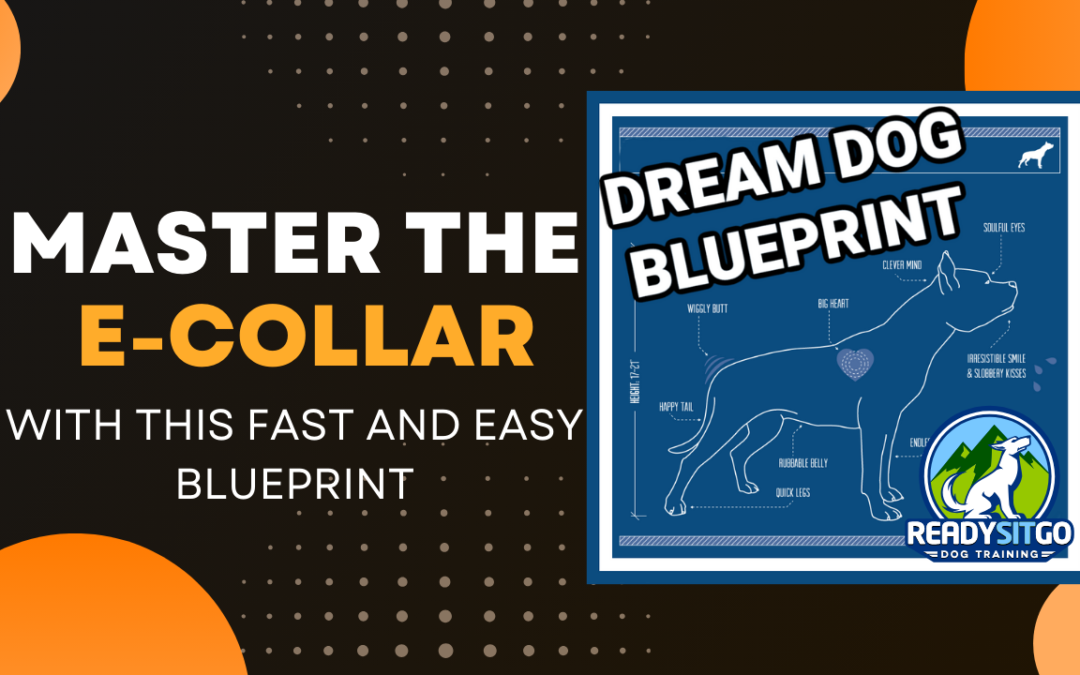
The Blueprint to Success
So, you’ve got your shiny new E-collar, and you’re ready to embark on this journey. But before we dive in, take a deep breath, grab a cup of coffee, and remember to take it one step at a time. Think of this as your roadmap to transforming your dog into the obedient, well-behaved companion you’ve always dreamed of.
Level 0: The Starting Point (Where the Magic Begins)
Here’s where we kick off this E-collar adventure. Whenever you give a command or say a word with an action, hit that C button as you say the word. It’s like gently tapping your dog on the shoulder, saying, “Hey, buddy, listen up!” Some examples of these action words include:
* Come
* Off
* Quiet
* Place
* Sit
* Heel
The Three Possible Outcomes (aka The Dog Training Trifecta)
When you give a command, one of three things will happen:
-
- Your dog will do what you want: This is the holy grail of dog training. Your dog will sit, stay, come, or do whatever you ask without hesitation. Party time, indeed!
- Your dog will make an attempt: This is like the participation trophy of dog training. Your dog will try but maybe not quite get it right. Think of it like when you try to cook a recipe, but it ends up looking like a hot mess (been there, done that).
- Your dog will ignore you: This is like the teenager phase of dog training. Your dog will give you the cold shoulder, ignore your commands, and probably listen to heavy metal music (just kidding, but that would be hilarious).
What to Do Next (aka The Art of Reading Your Dog)
Depending on your dog’s response, here’s what you’ll do next:
-
- Praise and party: When your dog does what you want, give it the praise and rewards it deserves. Think treats, toys, love, and verbal praise (but not too much; we don’t want to make it a diva).
- Help them out: If your dog makes an attempt but doesn’t quite get it, lend them a helping hand (or treat or toy). Don’t turn up the dial as long as you think your dog is trying and not distracted.
- Adjust the levels: If your dog ignores you, keep your cool (like a dog owner’s version of a Jedi), and slowly adjust the levels 5ish points at a time. Once you get their attention, go back to level zero and try again.
The Key to Success (aka The Secret to Not Losing Your Mind)
While doing all of this, remember to have a leash on your dog to help them if necessary. The key to mastering E-collar training is to be consistent, patient, and positive. Don’t get discouraged if your dog doesn’t get it right away (trust me, I’ve been there too). With time and practice, it’ll become second nature, like driving a car or making a perfect grilled cheese sandwich.
So, there you have it – the blueprint to unlocking your dog’s potential. Follow these easy-to-follow steps, and you’ll be well on your way to having the dog of your dreams (or at least a dog that doesn’t drive you crazy). Happy training, and may the odds be ever in your favor!
How to Keep Your Pup from Becoming a Pyrotechnic Panic Attack This 4th of July
It’s the most wonderful time of the year! The grills are firing up, the beers are flowing, and your neighbors are about to put on the most impressive amateur fireworks display this side of the Mississippi.
Oh, and let’s not forget the real stars of the show – our poor, unsuspecting canine companions who are about to lose what little remains of their minds.
According to dog shelters, most dogs run away more during the weeks leading up to and on the 4th of July than at any other time of the year.
Some shelters even report a 30-60% increase in lost pets during this joyous holiday. Yikes!
I don’t know about you, but I’d rather not have to go searching for my furry friend amongst the sea of bottle rockets and Roman candles. I can’t even imagine the fear and pain my dog would be going through out on the mean, scary streets of Denver by themself with explosions going on all around them.
Watch my video to learn the top-secret tips and tricks for keeping your pup calm, cool, and collected – even when the fireworks make them ruff!
Spoiler alert: It involves treats, belly rubs, and a healthy dose of sarcasm
https://www.youtube.com/watch?v=MAUBOBDaEb8&t=35sSo, in the spirit of keeping our pups safe and sane, I’ve compiled the Denver Dog Guru’s top tips for a stress-free Fourth of July.
Tip 1: Desensitize Your Dog, aka Make Them Think Fireworks are Just a Bunch of Fart Sounds and Hot Air
Just head to YouTube, search for some fireworks sounds, and shower your dog with love and treats. Slowly increase the volume over time, and soon your pup will be begging you to let them join in on the pyrotechnic party.
Tip 2: Create a Safe Space or, The Doggy Panic Room
Next, create a “doggy panic room” – a quiet, secure space in your home where your four-legged friend can retreat during the festivities. Think of it as a furry fortress of solitude, complete with comfy pillows, soothing white noise, and absolutely no view of the sky – just in case your dog happens to have x-ray vision.
Tip 3: Tire Them Out, Exercise Your Dog into a Fireworks-Induced Coma
And let’s not forget the most important step: tire that pup out! Take them on the mother of all walkies or a full-body workout fit for a professional athlete. A tired dog is a happy dog, and a happy dog is far less likely to freak out when the sky starts exploding
Tip 4: Stay Calm and Patient, or Just like my Ex, You Can Fake It
You’ve got to stay calm and patient like a therapist trying to talk a jumper off the ledge. Provide comfort and reassurance without reinforcing their fear. Just remember, you’re the pack leader here, so act like it (even if you’re secretly curled up under the bed with them).
So there you have it, folks – the Denver Dog Guru’s foolproof guide to keeping your pup safe and sane this 4th of July.
Follow these tips, and you’ll be the MVP of the neighborhood while your dog happily naps through the chaos. And who knows, you’ll even get a chance to show off your newfound dog whisperer skills to the cute neighbor down the street.
Just don’t forget the most important rule of all: if all else fails, hide under the bed together. After all, being together with your dog is all that truly matters… that and making sure they don’t end up as collateral damage in your neighbor’s homemade fireworks display.
Say Goodbye to Nipped Fingers: The Ultimate Treat-Dispensing Hack!
Ah, the age-old conundrum of treat-giving. We’ve all been there – trying to reward our furry friends with a tasty snack, only to end up with a handful of slobbery teeth and a bruised ego.
But fear not, dear Denver dog owners, for I have a revolutionary revelation to share with you. It’s time to ditch the open-handed method and finger pinch technique, and embrace the ultimate treat-dispensing hack: the duck hand!
Want to see the Duck Hand hack in action? Check out the video below, where I demonstrate the technique with my own furry friends! You’ll see just how easy it is to turn your hand into a treat dispenser and keep your fingers safe from those excited teeth. Watch as my dogs eagerly await their treats and learn how to use the Duck Hand hack for yourself!
https://www.youtube.com/watch?v=4PO1_cueMbo
The Problem with Traditional Treat-Giving
Let’s face it, the old ways just aren’t cutting it. The open-handed method, while safe, results in a treat-vacuum effect, where your dog gobbles up the goods and promptly loses interest.
And don’t even get me started on the finger pinch method – it’s like playing a game of “nip-the-human” with your enthusiastic pup.
Enter the Duck Hand: Savior of Snack Time
But fear not, dear reader, for I have discovered the secret to treat-dispensing nirvana. Behold, the duck hand!
By curling your fingers into a quacking duck shape, you create a protective hammock for your treats and an impenetrable force field against those pesky canine teeth. It’s like a slot machine for your dog’s snacks, and you’re the jackpot master
How to Turn Your Hand into a Treat Dispenser
It’s simple, really. Just follow these easy steps:
-
- Curl your fingers into a duck shape (beak and all)
- Place treats in the “hammock” of your thumb
- Present your duck hand to your dog, with fingertips touching their chin
- Slowly release treats as desired, keeping those fingertips in contact
- Repeat, repeat, repeat – it’s like a treat-filled game of “Simon Says”!
The Benefits of the Duck Hand
This technique is not just a novelty, folks. It’s a game-changer. By turning your hand into a treat dispenser, you:
-
- Avoid those pesky nips and bites
- Keep your dog engaged and interested
- Can lure your dog into learning new tricks
- Can even create “jackpots” of multiple treats at once (because who doesn’t love a surprise?)
Conclusion
So, dear Denver dog owners, it’s time to level up your treat-giving game. Ditch the old ways and embrace the duck hand. Your fingers (and your dog) will thank you.
Remember, the key is to keep ’em guessing and wanting more. Turn your hand into a slot machine, and get ready for a treat-tastic time with your furry friend!
Is Your Dog a Hidden Hero? Find Out with the Elite Canine Good Citizen Test Right Here in Denver!
Are you tired of your dog being a couch potato? Do you dream of them becoming service superstars or therapy rockstars? Well, buckle up, Buttercup, because the Canine Good Citizen Test is here to put your pup’s skills to the test!
As a certified Canine Good Citizen Evaluator, I’m like a doggy professor, and this test is the final exam. But don’t worry, I’m here to guide you through it all.
https://www.youtube.com/watch?v=Bl1ZIzZM3EY
What is the Canine Good Citizen Test?
The Canine Good Citizen Test is a prestigious evaluation that assesses your dog’s behavior and obedience skills. Passing this test is the first step in the world of dog sports and a necessary step for the Go Team tryouts, which are happening soon. Who knows, your dog could be on the news, helping people in need, before you know it! The test evaluates your dog’s ability to behave well in public, respond to basic commands, and demonstrate good manners.
Why Should You Take the Test?
By taking the Canine Good Citizen Test, you and your dog can:
-
-
Show off your skills and up your game
-
Take the first step towards becoming a service dog or therapy dog
-
Join the ranks of the canine elite
-
Get guidance and support from an experienced evaluator (that’s me!)
-
Enjoy a fun and rewarding experience with your dog
-
Strengthen your bond with your dog through teamwork and trust
-
Open doors to new opportunities for you and your dog
-
The 10-Part Test: Can Your Dog Pass with Flying Colors?
The Canine Good Citizen Test is divided into 10 parts, and your dog needs to pass all of them to become a certified Canine Good Citizen. Here’s what’s involved:
-
-
Accepting a Friendly Stranger: Your dog needs to be friendly and calm when meeting new people. No growling or hiding under the couch allowed!
-
Sitting Politely for Petting: Your dog needs to sit calmly while being petted by a stranger. No squirming or trying to lick the stranger’s face (as tempting as that may be)!
-
Appearance and Grooming: Your dog needs to tolerate being touched and examined by a stranger. No flinching or trying to bite the stranger’s hands off!
-
Out for a Walk: Your dog needs to walk nicely on a leash without pulling or trying to chase squirrels (as fun as that may be)!
-
Walking Through a Crowd: Your dog needs to remain calm and composed while walking through a crowd of people. No barking or trying to play “dodge the human”!
-
Sit and Down Stay: Your dog needs to sit and lie down on command and stay in those positions while you’re away. No sneaking off to sniff out treats!
-
Coming When Called: Your dog needs to come to you when called, even if there are distractions like squirrels or other dogs. No ignoring you or pretending they didn’t hear!
-
Reaction to Another Dog: Your dog needs to remain calm and composed when meeting another dog. No growling or trying to play “tackle the other dog”!
-
Reaction to Distractions: Your dog needs to remain focused on you even when there are distractions like loud noises or other animals. No getting spooked or trying to run away!
-
Supervised Separation: Your dog needs to remain calm and composed when you leave them with a stranger for a short period. No barking or trying to escape!
-
Want to learn more about the Canine Good Citizen Test and see it in action? Check out my video, where I explain the test in more detail and show you what to expect
Click Here to Watch the Test in Action
Don’t Worry, I’ve Got Your Back (and Your Dog’s Too!)
I’ve seen it all over the last decade, and I’m here to guide you every step of the way. With a healthy dose of humor for the humans and a whole lot of love and treats for the dogs, we’ll work together to help your pup become a certified Canine Good Citizen. My experience and expertise will help you navigate the test with confidence and ease.
So, What Are You Waiting For?
Contact me today to schedule your test and let’s make your dog famous! Whether you’re from Denver or beyond, I’m here to help you and your pup achieve greatness.
Let’s Get Started!
Don’t miss out on this paw-some opportunity to discover your dog’s hidden hero. Take the first step today and let’s see if your pup has what it takes to become a certified Canine Good Citizen!
Ready, Set, Go!
Contact me now to schedule your test and let’s get started on this exciting journey together!
The Magic of “My Dog Has Covid,” The Phrase That Puts Pushy People on Pause!
As a dog trainer, I’ve experienced it all – the unwanted attention, the invasive strangers, and the constant interruptions during training sessions.
There are many reasons why you would not want strangers rushing up to you and your dog. Your dog could be
-
- Young
- Reactive
- Scared
- Aggressive
- In training
It is so hard to advocate for my dogs and not seem rude to the public.
But I’ve discovered the ultimate solution: “My dog has Covid!”
Are you tired of strangers and their dogs invading your personal space? Do you want to create an invisible force field around you and your furry friend? This simple phrase is the answer!
With “My dog has Covid,” you’ll no longer have to deal with:
-
- Overly friendly strangers who think it’s okay to pet your dog without permission
- Off-leash dogs running up to yours
- Kids jumping on your dog
- Unsolicited dog advice from self-proclaimed experts
This magic phrase creates a 6-foot bubble of respect around you and your dog, thanks to the universally understood power of social distancing. No more arguments, reasoning, or bribing—just a simple, effective way to keep everyone safe and happy.
So, remember: when in doubt, “My dog has Covid!” Share this secret with your fellow dog owners and let’s keep our furry friends safe and respected.
Watch the video to learn more and share with your fellow dog lovers!
https://www.youtube.com/watch?v=M4YG90oGpy8
Unleash Your Inner Marine with This Dog-Walking Superhero Hack!
Are you tired of feeling like you’re in a wrestling match every time you take your dog for a walk? Say goodbye to sore arms and hello to happy strolls with this military-grade leash hack that will turn you into a dog-walking superhero!
Picture this: you’re out for a stroll with your furry companion, but it feels more like a battle of strength between you and a furry tank on the other end of the leash. Your arm is aching, your grip is slipping, and you’re one tug away from rope burn so intense you’ll mistake your dog for a porcupine.
But fear not, dear reader, for I bring you the secret weapon that will revolutionize your dog-walking game – a grip so strong that even Hulk Hogan would be impressed. And the best part? You won’t need to rely on your puny human muscles to conquer the leash.
Here’s the trick: instead of straining your biceps, use the power of your bones. Simply create a loop with the leash, slide your thumb through it, bring the loop into the palm of your hand, and close your hand around it. Voila! Your hand is now a fortress of strength, powered by your unbreakable adamantium bones.
Watch this video to learn how to hold the leash like a Superhero!!!
https://www.youtube.com/watch?v=xTZ6BOB-DoA
This technique isn’t just your average dog-walking tip – it’s special ops-level stuff. In fact, Marines have been using a similar technique for centuries to steady their aim and take precise shots from far distances. By relying on bone support rather than muscle strength, they can ensure a steady grip even under the most challenging conditions.
So, next time you head out for a walk with your furry Yoda on steroids, remember to loop your thumb around the leash and let your bones do the heavy lifting. Not only will your dog be amazed at your newfound strength, but you’ll also avoid the aches and pains that come with traditional leash-holding methods.
And if you need to adjust your grip or switch things up, simply loosen your hold and let your hand act as a biomechanical pulley – giving you complete control over the situation. You can even take it a step further and try the two-handed grenade leash trick for added stability and control.
With this bone-crushing grip, you’ll no longer feel like you’re battling a leash but instead commanding it with ease, just like a true Marine. So, ditch the death grip, embrace your inner superhero, and conquer that walk jarhead style!
Now go forth, brave dog walker, and show that leash who’s boss – one bone at a time!
Reasons Why You Should Take Care of Your Dog’s Teeth
As a pet parent, it is your responsibility to keep your furry friends happy and healthy. One of the best ways to achieve this is to keep your pet’s mouth healthy.
Dogs need dental care for the same reasons that we do. Just like humans, dogs can suffer from oral health problems such as gum disease, plaque, tooth loss and others. Unfortunately, a lot of pets haven’t had their teeth looked after. In fact, 32% of pet owners admitted that they only brush their dog’s teeth a few times a year, which is not enough to make an impact in their pet’s dental health.
Here are the reasons why you should take care of your dog’s teeth.
Prevents bad breath
Daily brushing can help remove food particles from between the dog’s teeth. Plus, professional dental cleaning can prevent the accumulation of plaque and improve the health of your pet’s mouth; thus, preventing bad breath.
Periodontal disease
You wouldn’t go a few days without brushing your teeth, right? So, why would your dogs? Believe it or not, plaque forms on the tooth a few minutes after eating. Overtime, bacteria and plaque solidifies, forming hard calculus.
Studies suggest that 80% of dogs aged 3 and up suffer from periodontal disease. This can be incredibly painful. Regular teeth cleaning and dental exams are important to prevent periodontal disease.
Prevent health problems
Dental problems, when left unchecked, may lead to serious health problems. The bacteria can end up in the bloodstream, which may lead to kidney and heart problems.
Because dogs usually try to hide their pain, most owners do not notice that their pets are in great pain. They may still act and eat fine despite having abscessed teeth or bleeding gums. You might never know about it until it’s in the advanced stage. This is why you need regular dental care.
Increase lifespan
Oral health problems can negatively affect your dog’s health. As it progresses, it can actually shorten the life expectancy of your canine companion. Invest a little bit of your time and money in your pet’s dental health to ensure that your furry best friend stays healthier and live longer.
Common Health Issues for Dogs
Dogs depend on us for good care. As pet parents, it is our responsibility to keep them happy and healthy. Your four-legged friend may know how to ask for a treat, but she wouldn’t tell you if she’s feeling under the weather.
Watch out for the following health issues and visit the veterinarian immediately if you think she has one of these illnesses.
Dental problems
Studies suggest that 80% of dogs suffer from periodontal disease by the age of 2. As such, it is important to brush your dog’s teeth regularly and schedule regular check-ups to prevent the occurrence of dental problems.
Periodontal disease does not only cause smelly breath, it can also lead to serious health problems like kidney disease, diabetes and heart disease if left unchecked.
Arthritis
Arthritis is often associated with senior dogs, but big dogs are also at risk. If you notice that your dog is having a hard time getting up from a lying position or begins to move around less, she may be suffering from arthritis.
Diabetes
Just like humans, dogs are also at risk of developing diabetes. Overweight dogs are at higher risk of diabetes. If your canine companion is depressed, experiences rapid weight loss, urinates frequently and appears weak, she may be diabetic.
Cancer
As horrible it is to think about, your dog may suffer from cancer. Just like humans, dogs are susceptible to certain types of cancer. What’s alarming is that they can metastasize at a faster rate. Lethargy, appetite changes, sudden weight loss, lumps or bumps under the skin, and unusual odors are common signs of cancer. Regular check-ups are important to ensure that your dog is in top shape.
Kennel cough
Kennel cough is a respiratory infection caused by bacteria and viruses. It is highly contagious, so be sure to keep your furry pal away from other dogs. Loss of appetite, lethargy, leaky nose and eyes, dry hacking cough are common signs of kennel cough.
Caring and Looking After an Aging Dog
Older dogs have different caring requirements as compared to younger dogs. While your dog reaches seniorhood, his basic needs, from diet to exercise may begin to change. As a pet parent, it is your responsibility to ensure that they stay happy and healthy.
Here are some tips for caring and looking after an aging dog.
Keep them active
Your dog may be slowing down, but that shouldn’t stop you from providing them with enough exercise. We all know that exercise is important to keep dogs healthy. However, now that your dog is in his golden years, they may find it difficult to move around, let alone exercise. As such, it is important to choose activities that your dog is able to perform. If your dog suffers from medical conditions, time outdoors may need to be cut down.
Special accommodations for senior dogs
A lot of pet parents fail to realize this, but you need to make some adjustments as your dog ages. For instance, senior dogs who suffer from arthritis may have a hard time climbing the stairs. You can put a ramp to make it easier for them to get around. Placing rugs or carpet on hard surface flooring may also be beneficial.
Watch what they eat
Good nutrition is important at every age. At this stage, it is important to feed them with nutritious foods to keep them healthy. Since they are not as active as they used to, they may start to put on weight. As you probably know, weight gain increases the risk for health problems. Keep an eye on their diet. Also, make sure you feed them with foods that are easy to digest.
Set up regular visits to the veterinarian
Since older dogs are more likely to suffer from medical problems, we advise that you visit your veterinarian at least twice a year. Routine check-ups will help keep your dog in top shape, even as the years creep up.
Dogs are very good at hiding health problems. Once you notice that there’s something wrong with him, it might be too late. Don’t wait for your dog to get sick before scheduling an appointment with the vet.
Human Foods That Can be Toxic to Dogs
It can be tempting to share your food with your furry best friend. But just because it’s perfectly suitable for human consumption, doesn’t mean that it’s safe for dogs as well. Because of their different metabolism, some foods that are edible for humans can pose hazards for dogs.
Because we care about you and your canine companion, we have put together a list of foods that can be toxic for dogs. Please call your vet immediately if you suspect that your dog has ingested any of the foods on this list.
Nuts
Nuts such as walnuts, pecans, macadamia and almonds contain high amounts of fats and oils. This can cause tremors, vomiting, weakness, depression and hyperthermia in dogs. Symptoms may be worse when eaten with chocolate. It may even lead to death in some cases.
Chocolate
Most people think of chocolates as treats. However, chocolates can be toxic to dogs. Even just a little bit of chocolate can cause vomiting and diarrhea. When ingested in large amounts, it can cause tremors, seizure, abnormal heart rhythm and even death.
Chocolates contain a very toxic substance called methyxantines. Make sure you keep chocolates off counters and other places your dog can reach.
Avocado
No matter how good you think the guacamole is, you should never share it with your dog. Avocado contains a toxic substance called persin, which can cause breathing difficulties, upset stomach and fluid build up in the chest.
Grapes
Grapes may be a fruit, but it can be poisonous to dogs. In fact, even a small amount can make a dog ill. The dog may become depressed and lethargic after eating grapes. Eventually, the dog may suffer from kidney failure. Death from kidney failure may occur within 3 to 4 days.
Alcohol
Beverages like wine, liquor and beer contains alcohol. You should never let your dog have any of these beverages. Just a small amount of alcohol can cause difficulty of breathing, problems with coordination, diarrhea and vomiting in dogs.
Alcohol has the same effect on a dog’s brain and liver, but it can be significantly more toxic to dogs than to humans.